Tipping is one of those small travel questions that causes surprising worry. In Mauritius the honest answer is relaxed: a tip for good service is appreciated, but it is a gesture, not an obligation, and nobody will chase you for it. Many Mauritians do not tip each other, and visitors who skip it cause no offence.
This guide explains when tipping makes sense, what to look for on a bill, what amounts travellers usually give and why it helps to carry small rupee notes. There is no official tipping rule, so the figures below are common travellers’ guidelines rather than fixed rates. Adjust them to the service you received and your own budget.
Is Tipping Expected in Mauritius?
Not in the way it is in some countries. Tipping is discretionary, and wages in many service jobs are modest, so a small extra is meaningful to the person who receives it. The best habit is simple: check the bill, think about the service, and give what feels fair. Never feel pressured by someone demanding a tip.
A useful way to think about it is that a tip is a thank-you for something extra: a driver who waited while you took photos, a guide who explained the history of a place, or a waiter who looked after a large family with patience. Tip for that, not out of fear of being rude.
Tipping at a Glance
Only if no service charge is already on the bill.
Per bag, a common traveller guideline.
Round up or add a little if the driver helped.
Small notes in cash are the most useful.
Restaurants and Cafes
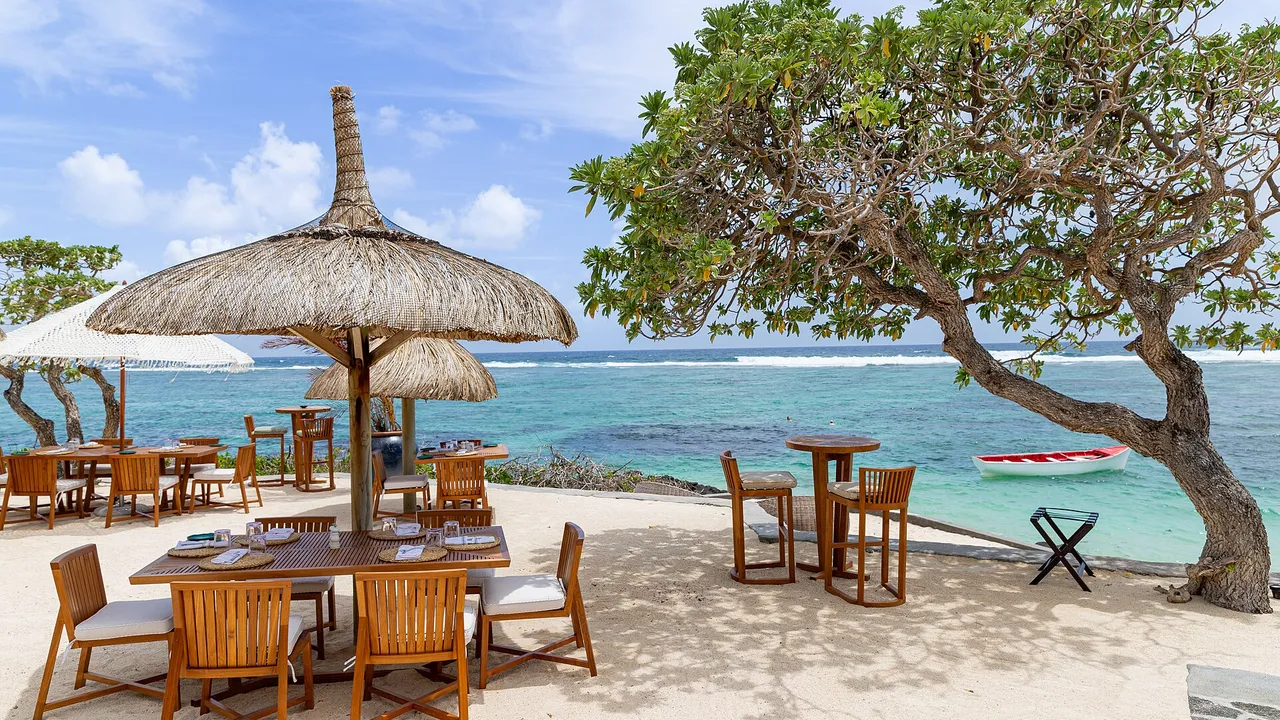
Start by reading the bill. Some restaurants, especially at hotels and in the upper range, add a service charge, and then no extra tip is needed. If you want to reward a particular waiter anyway, a little cash is welcome, since a service charge may be shared among the team. VAT, the tax shown on the bill, is a tax and not a tip.
Where there is no service charge, many visitors leave about 5 to 10 percent for good service in a sit-down restaurant. In casual cafes, rounding up or leaving loose change is enough. At street food stalls, market stands and simple local eateries such as those in our street food guide, a tip is not expected. If you pay by card, remember that adding a tip on the terminal is not always possible, so keep a few rupees in cash.
Hotels and Resorts
Many hotels have a shared tip box at reception, and some ask guests to use it instead of tipping individuals, so the money is divided among all staff, including those you never see. Ask at reception what the policy is. If tipping individuals is fine, travellers often give Rs 50 to 100 per bag to a porter, and Rs 100 to 200 for housekeeping, either every few days or at the end of the stay in an envelope marked for the room. Taxes added to hotel bills are government levies and are not a service charge.
Taxis and Private Drivers
Taxi fares are often agreed in advance rather than metered, so settle the price before you set off. Once the fare is agreed, a tip is not expected, though many visitors round up or add Rs 50 to 100 if the driver helped with luggage or gave useful advice. For a full day with a private driver, travellers often add a tip at the end if the day went well. Amounts of about Rs 200 to 500 are commonly mentioned, depending on the group and the length of the day. Our guide to the Port Louis Central Market is a good example of a stop where a driver’s local advice is worth acknowledging.
Guides, Boat Crews and Excursions
On a shared excursion, a catamaran day or a hike, the usual approach is a single tip for the guide or crew at the end of the day. Some travellers give around 10 percent of the tour price, and others a fixed amount per person. Neither is required. If a guide made your day, for example on the Le Morne Brabant hike, say so, and tip what feels right.
If a driver and a guide worked together, you can split your tip between them. Giving it to them directly, in cash and in rupees, makes sure it reaches the people who did the work.
Spas and Other Services
Spa treatments in hotels may include a service charge, so check the receipt first. If it is not included, a modest tip of 5 to 10 percent is common. Beach staff, guides at nature parks and people who carry your bags can also be tipped with a small note, but there is no fixed amount.
How to Give a Tip Politely
Hand the tip over with a smile and a thank you, preferably at the end of the service, and put it directly in the person’s hand or leave it on the table at a restaurant. There is no need to make a show of it. If you are in a group, agree on the amount beforehand so that nobody feels awkward, and keep the notes folded in a pocket rather than taking out your whole wallet. If the service was poor, you are free to leave nothing. The aim is to say thanks, and not to follow a strict rule.
On a longer trip, it can help to set aside a small daily tipping budget in rupees, for example for a driver, a guide and a couple of restaurant meals, so you are not working it out on the spot. This also stops you from over-tipping out of embarrassment when you have no small notes.
Tip in Rupees, in Cash
The most useful tip is in Mauritian rupees, in cash. Euros and dollars are sometimes accepted, but the recipient then has to exchange them, and part of the value is lost. Our guide to the Mauritian rupee explains notes and coins, and the guide to ATMs and cards shows how to get small notes. Ask for Rs 50, 100 and 200 notes when you withdraw or exchange money, because large notes are hard to break.
- Always check the bill for a service charge first
- Keep small rupee notes for tips in a separate pocket
- Ask your hotel whether it prefers a shared tip box
- Tip what feels right, since nothing is compulsory
Common Mistakes to Avoid
- Adding a second tip on top of a service charge without noticing
- Mixing up VAT or a hotel tax with a service charge
- Tipping in foreign currency that staff must exchange
- Having only large notes when you want to leave a small tip
- Feeling pressured into a tip you are not happy to give
If you would like a day with a local driver and a clear plan, you can ask us about private tours or local excursions, and we will explain what is included and what you may want to tip locally. Our one-week itinerary shows how many days you might spend with drivers, guides and boat crews.
Frequently Asked Questions
Do you have to tip in Mauritius?
No. Tipping is appreciated for good service but it is not compulsory, and many locals do not tip.
How much should I tip in a restaurant in Mauritius?
If no service charge is on the bill, many visitors leave about 5 to 10 percent. If a service charge is included, no extra tip is needed.
Do I tip taxi drivers in Mauritius?
It is not expected. Many visitors round up or add a small amount if the driver was helpful.
Should I tip in euros or in rupees?
In rupees, in cash. Foreign currency has to be exchanged by the recipient, which reduces its value.
Is the tax on my hotel bill a tip?
No. Government taxes on bills are not a service charge or a tip. Check whether a service charge is listed separately.
Plan Your Days Without Worries
Tell us your plans and we will plan a day with a local driver, explain what is included and tell you what to carry.
Browse Tours Browse Excursions